Banquet floor notes
Stacking banquet chairs and the arithmetic of a changeover
At midnight the last guests leave and 250 chairs have to come off the ballroom floor. How many chairs a stack holds, and how many stacks a cart takes, sets the length of that changeover. Multiply it out and you have the number of trips between the store room and the floor, twice a night, every night there is an event.
Stacking banquet chairs are bought for that sum. The padded seat, the frame finish and the shape of the back matter to the guest, and we come to them below. But the banquet team lives with three plainer figures from the record: whether the chair is listed as stackable, what it weighs, and how much floor a stack of them needs.

Open diagram at full size (new tab) ↗
Read the diagram in text
Three levels. 250 chairs weigh 3,000 pounds at 12 pounds a chair and 4,750 at 19 pounds. The aluminum banquet chair lists a stack of ten; a specialist confirms the stack height of the others. A 17-by-17-inch chair needs about 2 square feet per stack. A side panel adds that an armchair stack needs about 2.8 square feet.
- BANQUET NOTES
- Chair weight: 250 at 12 lb is 3,000 lb; at 19 lb, 4,750 lb
- Per room
- Stack height: 10 high on the aluminum chair; ask for the rest
- Per model
- Footprint: 17 by 17 inches: about 2 sq ft a stack
- Per stack
- 250 chairs
- 3,000 lb at 12 lb a chair
- 4,750 lb at 19 lb a chair
- 2 to 2.8 sq ft a stack
- Stacks: divide the chair count by the listed or confirmed stack height.
- Three figures set the changeover: what a chair weighs, how high it stacks, and the floor a stack takes.
What the record tells you
Open any chair in our banquet chairs and look for three lines: the stacking listing, the dimensions and the weight. Read those before you look at a single fabric.
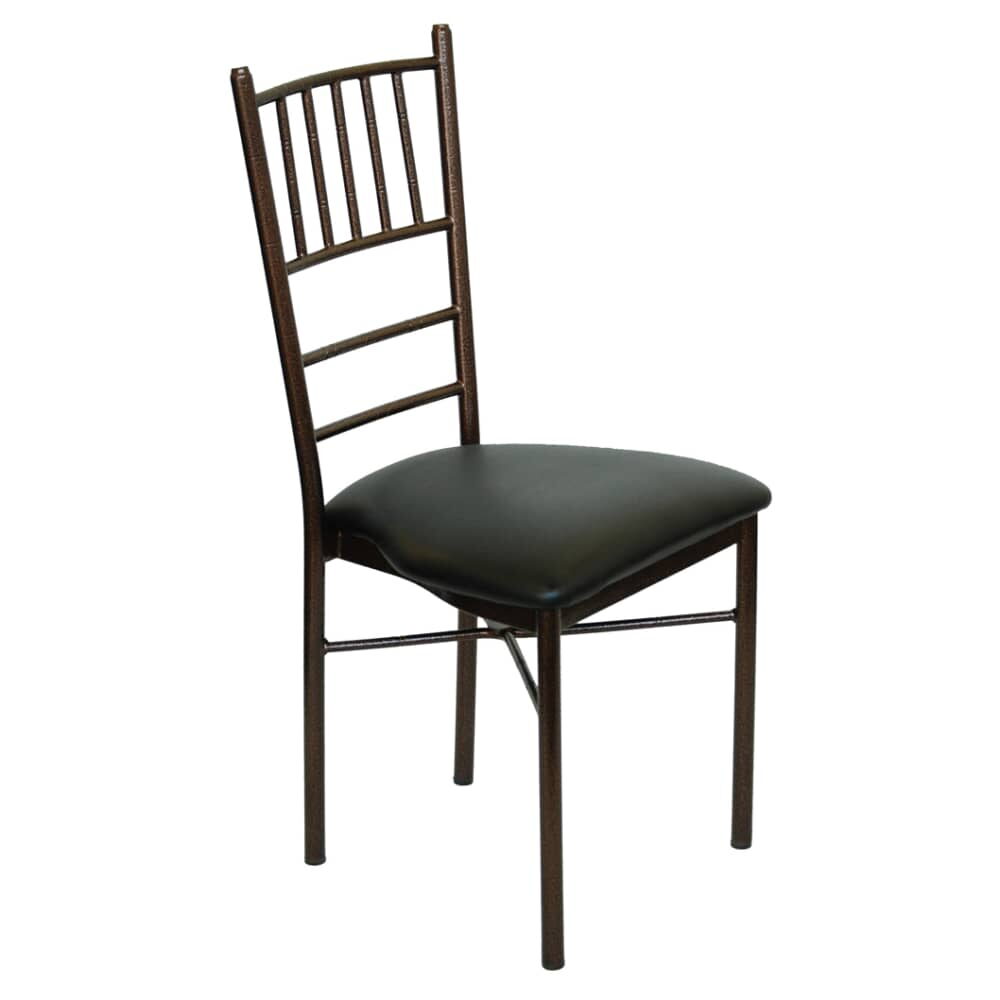
The figures vary more than the photos suggest. A copper vein metal Chiavari chair measures 17 inches wide by 17 deep and weighs 12 pounds. A banquet stacking armchair measures 21 1/2 inches wide by 18 1/2 deep and weighs 19 pounds. Both are listed as stackable, both carry 500 pounds, and both suit a ballroom. They make very different nights for the people who move them.
Seven pounds a chair is the gap between them. Across a ballroom of 250 that is 1,750 pounds, and the team lifts it off the floor at midnight and back onto it before breakfast. A banquet manager who has run a wedding weekend knows that figure in the shoulders before reading it on a page.
The stack height is the fourth figure. The aluminum banquet chair we come to below lists ten high; the Chiavari and the armchair give no count, so ask a specialist for theirs before you size carts or shelving. Plan with that number, never with a guess from a photo.
Weight, counted by the stack
Every chair your team adds to a stack adds its listed weight: 12 pounds for the Chiavari, 19 for the armchair. Multiply that by the stack height and you have the load on each cart, and the gap between the two chairs is felt on every ramp, every threshold and every turn into the service corridor.
A middle choice shows how far the range runs. The stackable aluminum banquet chair weighs 18 pounds and adds a padded back, a 19 1/4-inch seat height, and a frame you can finish in powder coat or a wood grain look. It stacks ten high, so a full stack puts 180 pounds on the cart. For the feet you can choose nylon glides in black, adjustable glides in plastic or in metal, and front casters. Casters change how a single chair moves across a dance floor, so ask your banquet captain which floor the chairs will cross most.
Here is the rule of thumb. Pick the lightest chair that still looks right at the head table, then check that its arms, if it has them, still let it stack on the record. Our wider set of stacking chairs lets you compare weights side by side.
Floor space for the stacks
Storage is the figure that gets left until too late. A stack takes at least the footprint of the chair at its base, so take width times depth from the record.
Work it through one stack at a time. A 17-by-17-inch chair covers 289 square inches, about 2 square feet. A 21 1/2-by-18 1/2-inch armchair covers about 398 square inches, close to 2.8 square feet, so each stack of armchairs takes nearly 40 percent more floor. Divide the chair count by the stack height to get the number of stacks, multiply by the footprint, and add a lane to wheel the cart in. The extra floor sounds like little until the store room also holds folding tables, the stage risers and the dance floor panels.
The cart count follows from the same figure. Divide the stacks by what one of your carts holds, round up, and double the result for a reset between a lunch and a dinner. Where a record leaves the stack height out, as on the Chiavari and the armchair here, a specialist can give it to you before you buy a single cart.
Choosing the seat and the frame
With the counts settled, turn to the guest's view. A padded vinyl seat wipes clean after a dinner with red wine; a padded fabric seat reads softer under ballroom light. The banquet stacking armchair takes either, with frame finishes in black, copper vein, silver vein, gold vein and sun gold. Chiavari frames, shown in our Chiavari chairs, are the classic wedding look, and their light weight is a fair argument for them on its own.
Aluminum frames sit between the two. Browse the aluminum chairs when the room hosts conferences as often as weddings and needs a chair that looks at home with a notepad as well as a place setting. Our ballroom chair guide compares styles by event type.
Request free swatches and finish samples before you commit to a color. Ballroom lighting is often warmer or dimmer than daylight, and a gold vein frame can look very different at eight in the evening than it does in the catalog.
Mixing models in one room
A common mistake is buying a second batch of a different chair when the first runs short. Two chair models rarely stack together, so the store room fills with half stacks, and the rows on the ballroom floor no longer match from the back. Guests notice a mismatched row before they notice the centerpieces.
Order the full count of one model, plus a margin for damaged chairs and for the head table. When the property grows, reorder the same chair and ask for a fresh swatch first, because our finish and fabric lists are revised now and then.
The store room sheet
Write the counts down where the team will see them: chairs per stack, stacks per cart, carts per room, and the floor area the stacks take when the room is clear. Save the ballroom as its own plan in property plans with those numbers in the notes, and download the project sheet for the banquet captain.
Then do one dry run before the first big event. Set a section of rows, strike it, and time the carts through the corridor. The minutes on that stopwatch are the true length of your changeover, and they tell you whether the chair you chose fits the night your team has to work. For the chairs in the rest of the building, see our hotel chair guide and the page on hotel dining chairs.