Banquet floor notes
Reading the size of standard banquet chairs before the cart is loaded
Ask a banquet manager for the size of a standard banquet chair and you will get a shrug, then a number from memory. The honest answer is on the listing. Two chairs that seem identical on the product page can differ by four inches in width and seven pounds in weight, and either figure changes how your team sets the room.
So the plan starts with the chair you are actually buying, and four lines on its listing: width, depth, seat height and weight. Here is what they look like across the banquet chairs we list, and what each one does once the doors are open.

Open diagram at full size (new tab) ↗
Read the diagram in text
Three levels. A 17-inch Chiavari chair gives 26 to a row, an 18 3/4-inch aluminum chair gives 22, a 21 1/2-inch armchair gives 20. A side panel checks seat height: a 30-inch table less a 19 1/4-inch seat leaves 10 3/4 inches.
- BANQUET NOTES
- 17-inch chair: 13 a side of a 36-inch aisle, 26 a row
- 26 a row
- 18 3/4-inch chair: 11 a side of the aisle, 22 a row
- 22 a row
- 21 1/2-inch armchair: 10 a side of the aisle, 20 a row
- 20 a row
- Seat height check
- Table at 30 inches
- Seat at 19 1/4 inches
- 10 3/4 inches between
- Seat to top: 10 to 12 inches for the guest.
- In a 40-foot ballroom with a 36-inch aisle, four chair widths give four different ceremony rows.
Four chairs, measured side by side
Take four chairs a ballroom might choose between.
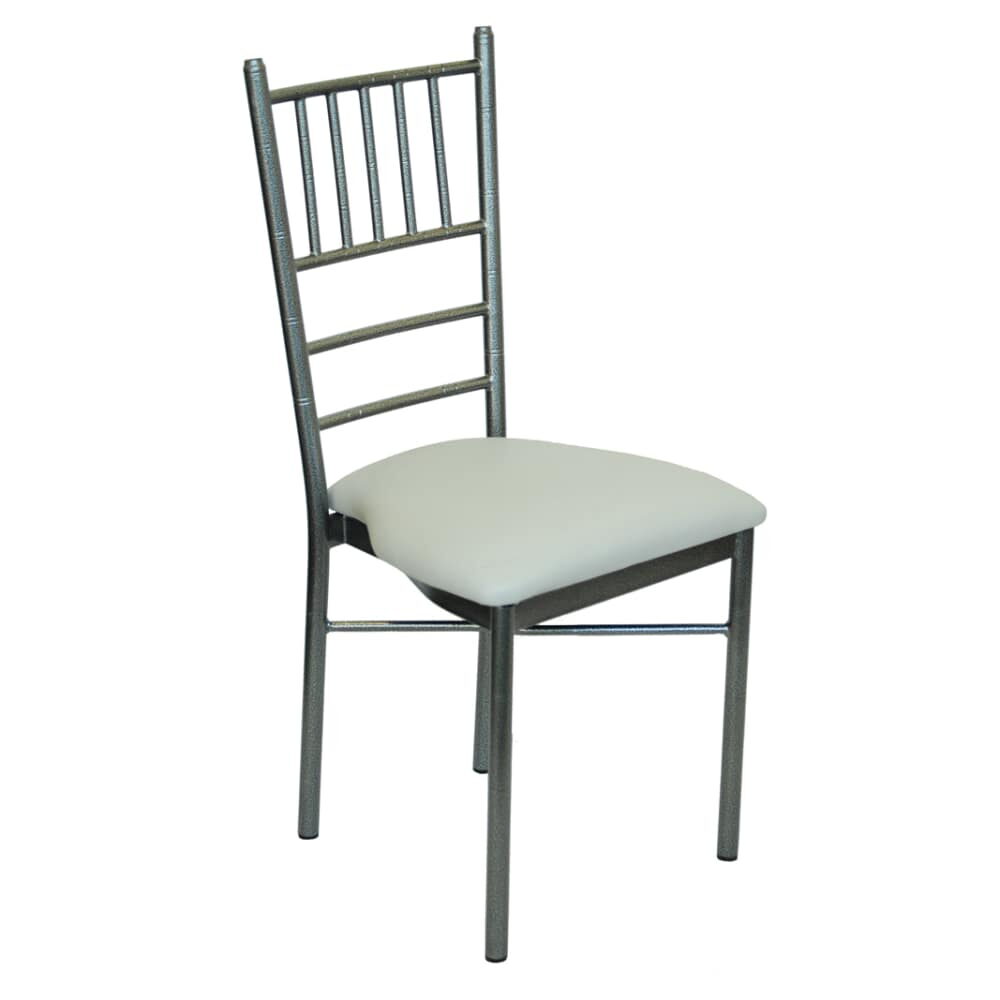
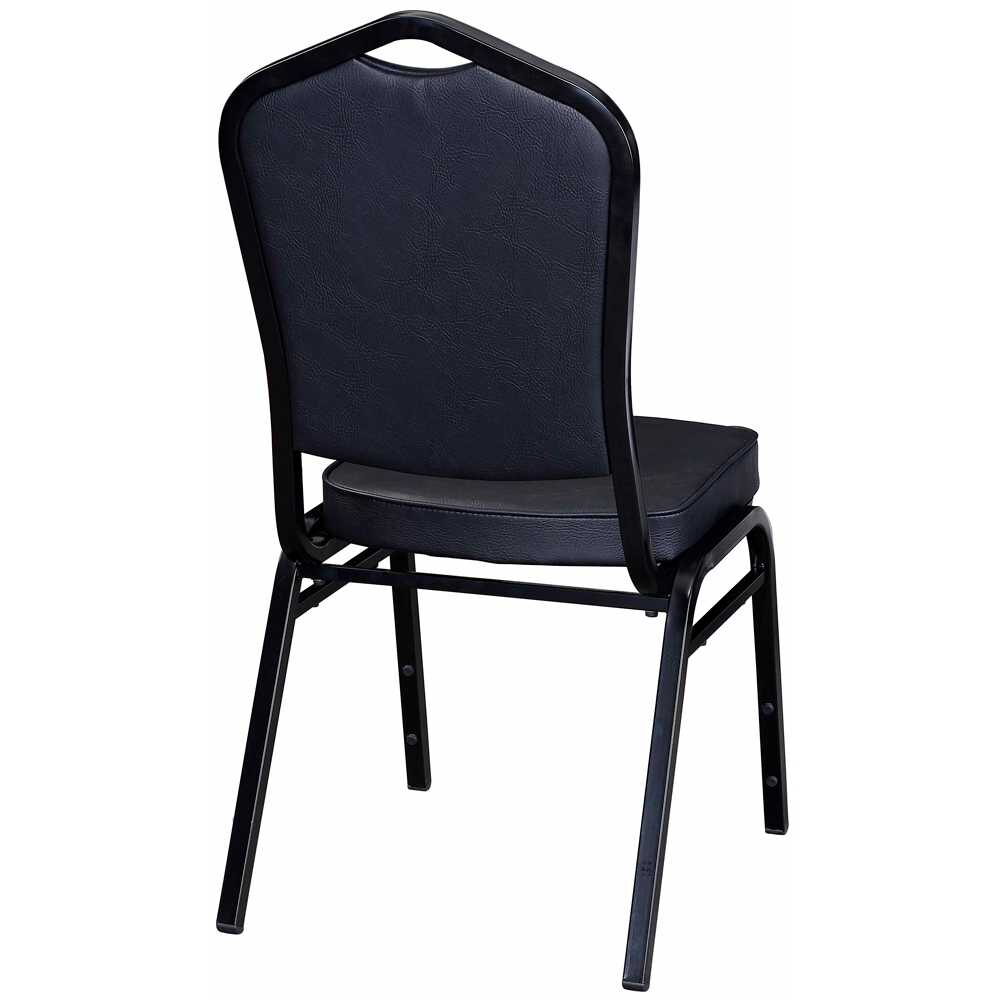
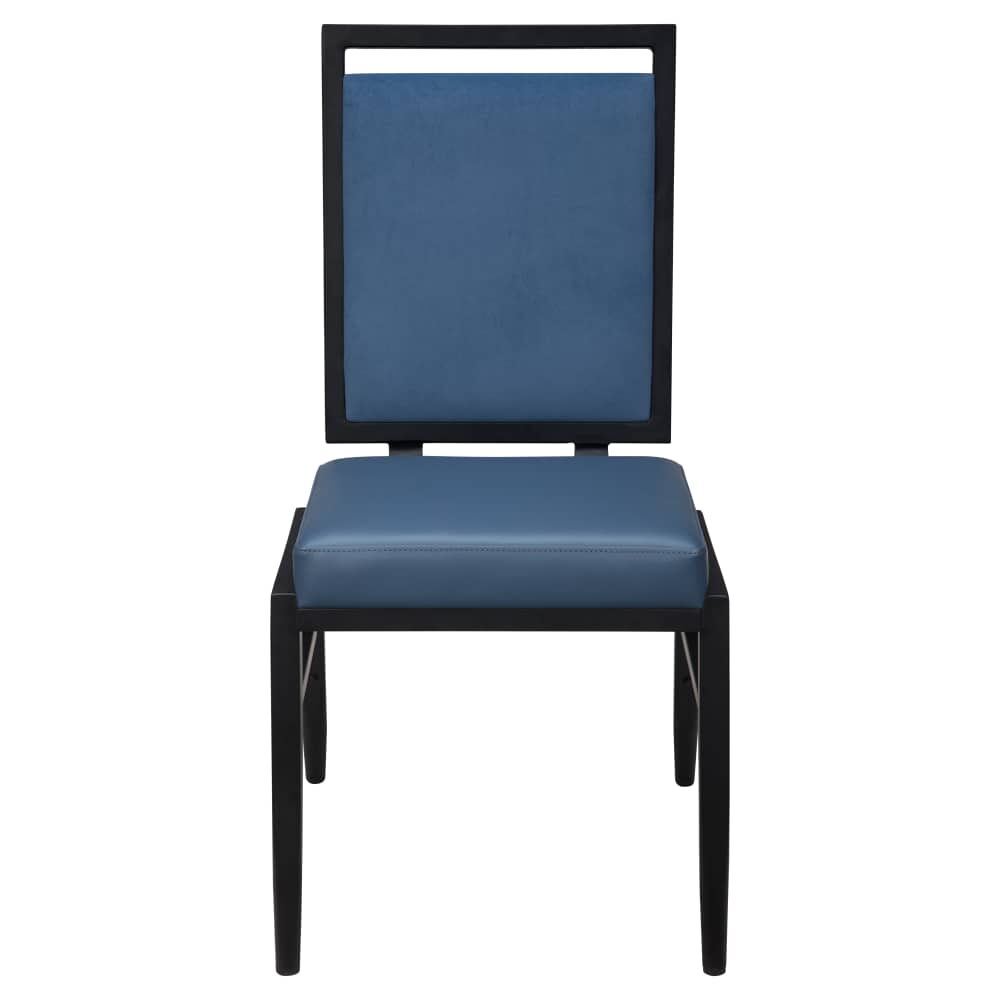
A silver vein Chiavari chair takes a square 17 by 17 inches of floor, stands 37 inches tall and weighs 12 pounds. A black banquet chair with a padded back is 17.35 inches wide and 22 inches deep, 36.2 inches high, at 13 pounds. The aluminum banquet chair is 18 3/4 inches wide and 23 3/4 inches deep, 36 1/4 inches high, at 18 pounds, with a seat height of 19 1/4 inches. The banquet stacking arm chair is 21 1/2 inches wide and 18 1/2 inches deep, 37 inches high, at 19 pounds.
All four are listed as stackable, and each carries a weight capacity of 500 pounds. Beyond that, they are four different plans.
Notice what is missing. Only the aluminum chair gives a seat height. The overall height of the others is the top of the back, not the seat, and it tells you nothing about how the guest meets the table. When a listing has no seat height, ask us for it before you order.
Seat height against a 30-inch table
A dining seat sits at 17 to 19 inches, and a guest needs a space of 10 to 12 inches between the cushion and the top. Every folding table we list for banquets stands at 30 inches.
Run the aluminum chair through it. Thirty inches less 19 1/4 leaves 10 3/4 inches, inside the range. Try a stackable steel dining chair whose seat stands at 19 1/2 inches and the gap is 10 1/2, still within the range, though near its low end. A seat that sat at 21 inches would leave nine, and a guest in a long gown would feel it by the main course.
The check takes a minute with a pencil. Do it for every chair on your shortlist, including the one your designer liked best on the mood board, and do it against the table you actually own, not a table in a catalog photo.
Width decides the row
Now the figure that sets your count. Say a ceremony is set in a ballroom 40 feet wide, with a 36-inch aisle down the center. That leaves 444 inches, 222 on each side of the aisle.
- Chiavari chairs at 17 inches: 13 a side, 26 a row.
- Padded side chairs at 17.35 inches: 12 a side, 24 a row.
- Aluminum chairs at 18 3/4 inches: 11 a side, 22 a row.
- Armchairs at 21 1/2 inches: 10 a side, 20 a row.
Across 12 rows, that is the difference between 312 seats and 240 in the same room. Seventy-two guests turn on four and a half inches of chair. The figures assume chairs set shoulder to shoulder; your planner may want a small gap, and the passage between rows is a matter for local building and fire codes, which your architect or designer checks.
At a long table the same widths work differently. At 24 inches a place, every one of these chairs fits, even the armchair, with two and a half inches to spare. Width only bites when the place gets tighter than that. Our note on banquet chairs with arms works the sum through at a round.
Depth and weight, the figures for the team
Depth is felt in the aisle and the store room. Twelve rows of 23 3/4-inch chairs take 285 inches of floor in chair alone; twelve rows of 17-inch Chiavaris take 204. That is almost seven feet of ballroom, before any passage between the rows.
Weight is felt at midnight. Two hundred and forty chairs at 12 pounds come to 2,880 pounds. At 19 pounds they come to 4,560. Your banquet team lifts that total off the floor after the event and carries it back before the next one.
A rule of thumb that holds up: for a room that resets every day, read weight before fabric. For a room that holds one long dinner a week, read depth before weight. Our stacking chairs and banquet chairs list all four figures, so the comparison is quick.
The mistake with a second model
The expensive error comes after the first order. A property runs short of chairs, buys a second model that looks similar, and assumes it is the same size. It is not. A 17-inch chair and an 18 3/4-inch chair in the same row push the end chair almost two feet past the aisle line after a dozen places, and the rows no longer match from the back of the room.
Keep one chair model per room. When you need more, reorder the same chair, and ask for a fresh swatch first, because our upholstery and finish lists change from time to time. Request free finish and fabric samples and compare them against a chair from the room.
A tape measure and one chair
Before you sign off on a model, borrow the numbers into a real setup. Mark one row on the ballroom floor with tape at the width of the chair you prefer, then set the tables you own at their 30 inches and sit a member of your team at each.
Then write the four figures for the chosen chair into the ballroom's plan in property plans, with the row count you measured. The next time sales books a ceremony, the count is already on the sheet, and our hotel chair guide covers the chairs for the restaurant and the lobby bar. For the cushions on these frames, read padded banquet chairs.