Banquet floor notes
Sizing the hotel dining table so the restaurant can join and part its tables
On a Tuesday the hotel restaurant is a room of two-tops: travelers alone or in pairs, one by the window, one by the wall. On Thursday the sales team books twelve for a client dinner, and by six the host has pushed five tables into a line and laid one long cloth. A well set hotel restaurant does both without anyone noticing the work.
That depends on the tables. Their sizes have to suit the usual party, their tops and bases have to add up to the right height, and their bases have to sit out of the way when the tables come together. Here are the sizes, the arithmetic and the one rule about bases that saves most of the trouble.

Open diagram at full size (new tab) ↗
Read the diagram in text
Three numbered cards: choose two-tops and fours by party size, up to a 30 by 48 rectangle, and add a 1 1/4 inch top to a 28 inch base for 29 1/4 inches. Then check that every round sits on feet reaching two thirds of the way across. A dark bar gives the private group example of five 30 inch tables seating twelve.
- TABLE NOTES
- 1
- Size by party: Two: 24 by 30. Four: 30 by 48.
- 2
- Top plus base: 28 in base, 1 1/4 in top.
- 3
- Two-thirds spread: A 48 in round needs 32 in.
- Five 30 by 30 two-tops in a row make a 150-inch table that seats twelve.
- Sizes by party, a base height plus top thickness near 29 to 30 inches, and a base spread of two thirds.
Sizes by the party they serve
Start with who sits down. Hotel restaurants see more pairs and solo guests than most dining rooms, plus a steady run of fours and the occasional six.
Pairs come first. The smallest two-top worth setting is a 24-inch square, most rooms settle on 24 by 30, and the roomy choice is a full 30-inch square. That roomy square earns its extra inches in a hotel, where a guest at breakfast spreads out a newspaper, a phone and a plate of eggs. Fours can squeeze onto that same 30-inch square, sit easily at a 36-inch square, or take a 30 by 48 rectangle with a pair along each long side.
Rounds handle the larger parties. Four guests can share a 36-inch round if the room is tight; four to six fit around 42 to 48 inches; eight need a 60-inch top. Rounds read well in the middle of a room and make a group of six feel like one table rather than a row.
Here is the rule of thumb that settles every size above: give each guest two feet of edge, and only drop to 18 inches when the room leaves no choice.
Tops and bases that add up
Most hotel restaurant tables are a top and a base bought as a pair, and the pairing decides the height. Aim the finished surface at a height between 29 and 30 inches off the floor.
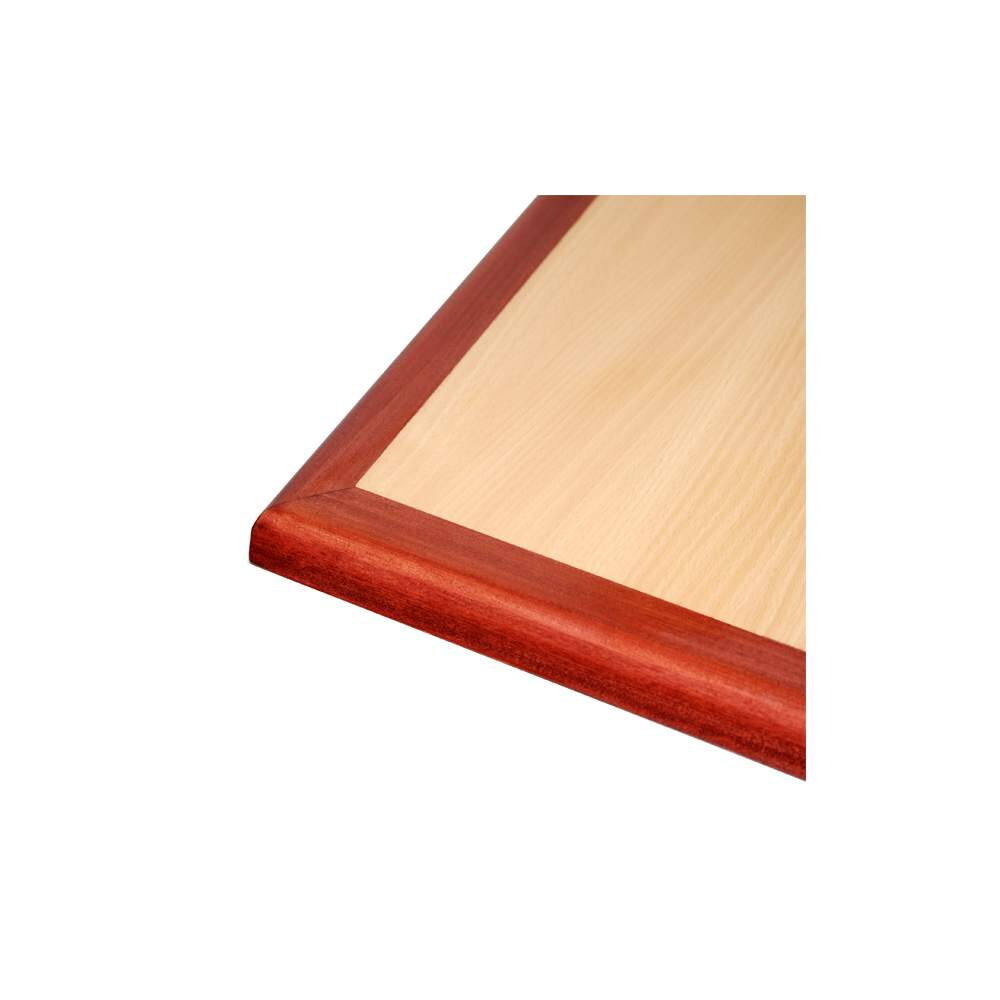
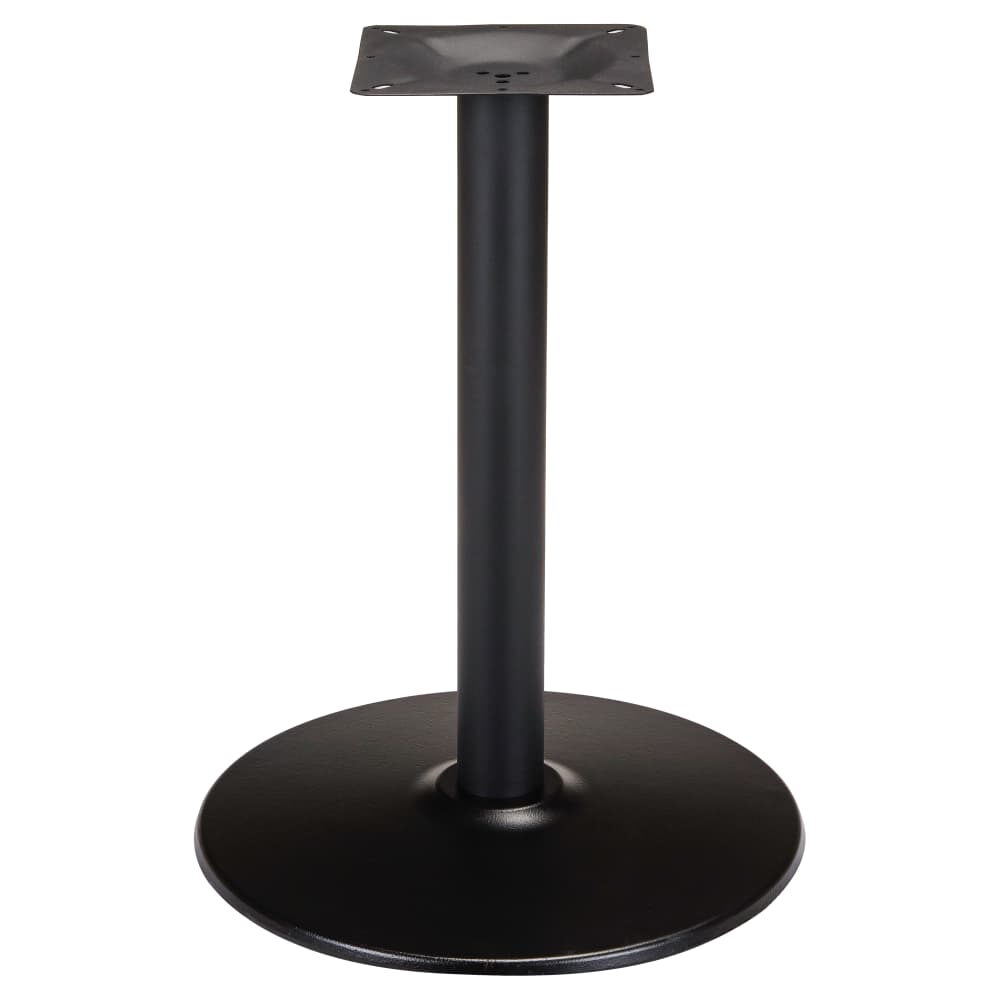
Take the laminate inlay tabletop with a wood edge. Its thickness is 1 1/4 inches, and the shape list runs from rectangle and square to round and drop leaf, with a choice of colors. Put it on the standard-height round metal base at 28 inches and the surface lands at 29 1/4. That lands inside the range with room to spare for a cloth.
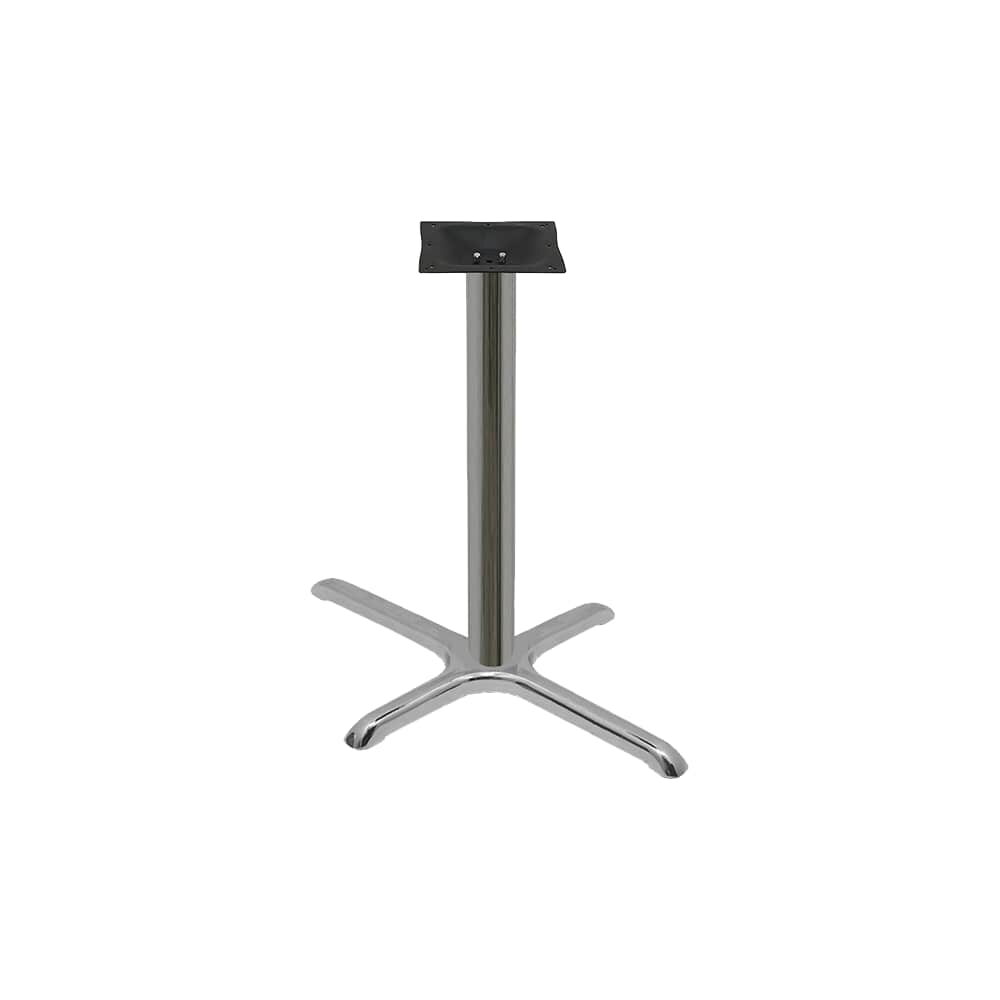
The same sum works with an X-prong base. The standard-height chrome X-prong base also stands 28 inches and comes in 22 by 22, 22 by 30 and 30 by 30 sizes. Browse the full set of table tops and table bases with a pencil in hand: base height plus top thickness, every time.
When the designer sketches a top larger, smaller or stranger than anything listed, it turns into a custom item. Plan the calendar around it. Listed tops ship after 14 to 21 business days. The custom top may need close to 8 weeks, we ask 40% of it up front, and after our confirmation it can be neither cancelled nor returned. For most hotel restaurants the listed sizes cover every party, so ask for free samples of the top material first and keep custom for the one table that truly needs it.
The base spread that keeps a round steady
This is where most plans go wrong. Measure the base across its feet and compare it with the top: the feet should reach to two thirds of the top's diameter or further, or a guest leaning on the edge will tip it.
Two thirds of a 36-inch round is 24 inches, so the 30-inch round base clears it easily. Two thirds of 42 inches is 28, and the 30-inch base still clears. Two thirds of 48 is 32, which is wider than any round base listed above. The common mistake is to order a 48-inch round on the same base as the 42s because the catalog photo looked the same.
For a 48-inch round, look at the wood-grain steel X-prong base, which comes in a 33 by 33 inch size at 28 inches high. That spread passes the two-thirds rule for the 48. The round table bases and the X-prong bases are worth comparing side by side for every round on the plan.
Re-setting the room for a private group
Back to Thursday. Twelve guests, one long table.
If the restaurant runs 30 by 30 two-tops, five of them in a row make a table 150 inches long and 30 deep. At 24 inches per diner, each long side seats six, which is the twelve. The ends stay open for the host or for a guest of honor if the party grows to thirteen or fourteen.
Now look underneath. Each table has its own base, and where two tables meet, two bases stand close together. A 22 by 22 X-prong under a 30-inch top leaves 4 inches from each base to the edge, so 8 inches between neighboring bases at every joint. That is enough for the bases to clear each other, and it keeps the guests' feet clear too. A round base of 22 inches under the same top behaves the same way. Bases larger than the top's inner zone start to collide when the tables are pushed together.
Rounds do not join, so a restaurant that relies on them for groups needs the right size on hand. Two 60-inch rounds seat sixteen and keep the conversation within each table.
Where the tables go next
The tables in the restaurant are only one set on the property. The wood banquet table guide covers the long rectangles for the head table and the function room, and the commercial round tables guide works through rounds for the ballroom. For dinner outdoors, the terrace dining table guide starts with bases listed for patio use. The full range of tables sits behind all three.
Before you place the order, draw the room twice in one property plan: once as a Tuesday of two-tops and once as a Thursday with the long table. Count the bases in both drawings, check each round against the two-thirds rule, and add the top's thickness to every base height on the list.